


A lawn that browns out in summer is not always dealing with drought stress. Sometimes the damage is being done from below the surface, and by the time it is visible above ground, a grub population has already been feeding on your lawn’s root system for weeks. Turf Chief Lawn Care helps homeowners identify and address grub problems before they escalate into the kind of damage that requires full lawn renovation to fix.
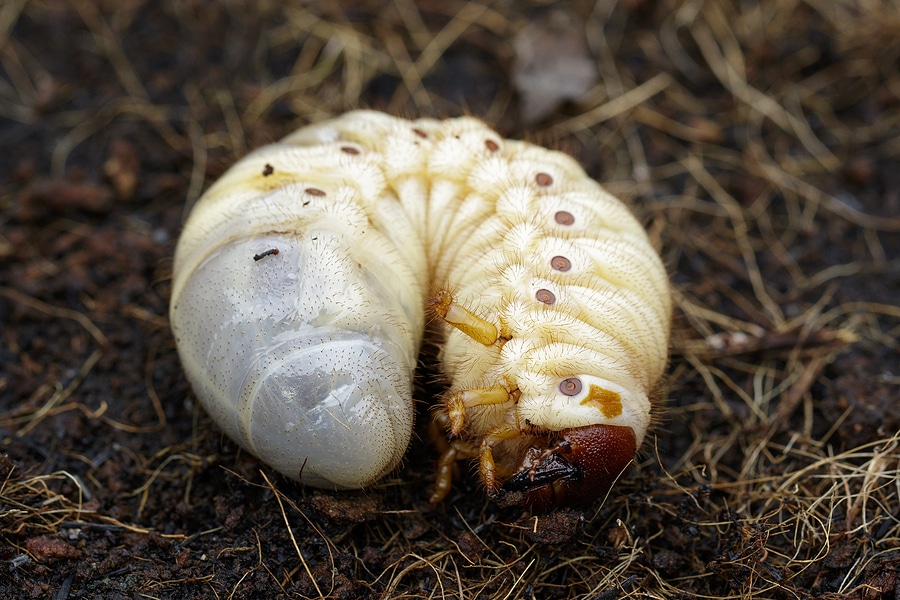
What Are Grubs?
Grubs are the larval stage of several common beetle species, including Japanese beetles, June bugs, and masked chafers. Adult beetles lay eggs in lawns during summer. Those eggs hatch into C-shaped larvae that feed on grass roots just below the soil surface through late summer and fall. A healthy lawn can tolerate a small grub population. An infestation above a threshold of roughly eight to ten grubs per square foot begins to cause damage that shows up as dead or dying grass.
Why Are the Signs Easy to Miss?
Early grub damage looks identical to drought stress: patches of grass that have turned brown and are not responding to watering. The easiest way to differentiate the two is to try to pull up a section of affected turf. Grass killed by grubs pulls up like a loose rug because the root system has been severed. Drought-stressed grass, by contrast, holds to the soil. Spongy turf that feels soft underfoot is another early indicator worth investigating.
Where Does Secondary Damage Come From?
An active grub population below the surface attracts a second wave of damage from above. Skunks, raccoons, moles, and birds all feed on grubs and tear up turf in the process of reaching them. A lawn that is being dug up or rooted through overnight is often signaling a grub infestation beneath it. Treating the secondary wildlife problem without addressing the grub population that attracted it accomplishes nothing.
Why is Grub Treatment Timing so Important?
Preventive grub treatments applied in late spring or early summer target newly hatched larvae before they establish and begin feeding. Curative treatments applied later in the season address existing populations but require different chemistry and tend to be less effective the larger the larvae have grown. Catching the problem early with a preventive approach is consistently the better outcome for the lawn.
Ready to Protect Your Lawn From the Ground Up?
Turf Chief Lawn Care serves homeowners throughout Buckner, KY, and the surrounding communities with professional grub control programs alongside weed control, flea and tick control, and aeration and overseeding to keep your lawn healthy from root to tip. Request a quote at (502) 586-4356 and stop the damage before it reaches the surface.